Supreme Court’s Masterstroke on Cheque Bounce Cases: Clarifying Cash Loans, Speeding Justice
By Dr. Ajay Kummar Pandey, Advocate, Supreme Court of India
End of Cheque bounce era ?
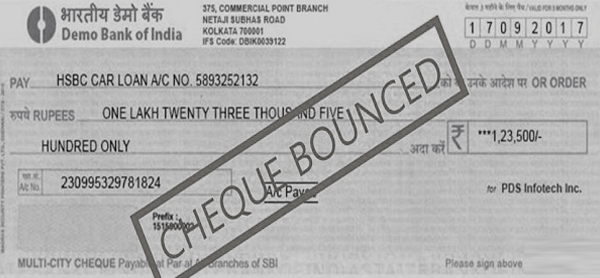
Cheque bounce litigation under Section 138 of the Negotiable Instruments Act, 1881 (NI Act) has become the single largest contributor to India’s trial court backlog. In Delhi alone, nearly 49.45% of all trial court pendency is from Section 138 cases. Similar trends exist in Mumbai and Kolkata, where cheque dishonour litigation clogs dockets and delays the delivery of justice in other criminal and civil matters.
In this backdrop, the Supreme Court in Sanjabija Tari v. Kishore S. Borcar & Anr. (2025) delivered a landmark ruling that not only settled a long-standing legal controversy on cash loans but also issued sweeping judicial reforms aimed at unclogging courts and restoring credibility in cheques as instruments of trust.
The Core Legal Issue: Cash Loan Above ₹20,000
The controversy arose from Section 269SS of the Income Tax Act, 1961, which prohibits taking or accepting loans of ₹20,000 or more in cash. The Kerala High Court had previously held that a loan advanced in violation of Section 269SS would be unenforceable under the NI Act.
The Supreme Court emphatically rejected this view:
Breach of Section 269SS may attract a penalty under Section 271D of the IT Act, but it does not render the underlying transaction illegal, void, or unenforceable.
Neither Section 269SS nor Section 271D states that such a loan is invalid in law.
Consequently, a dishonoured cheque issued in repayment of such a loan would still give rise to a legally enforceable debt under Section 138 of the NI Act.
This clarification is a significant relief for lenders, especially in India’s unorganised sector, where cash loans remain common.
Procedural Reforms: Tackling the 138 Pendency Crisis
Recognising the staggering pendency of cheque bounce cases, the Court went beyond the legal question and issued systemic directions to streamline the procedure.
1. Summons on WhatsApp, Email, and Dasti Service
Summons are no longer restricted to traditional postal service.
Complainants must file an affidavit with the accused’s WhatsApp number, email, and mobile details.
This multi-channel service removes the perennial excuse of “summons not received.”
2. Online Settlement through QR Code/UPI
District courts must operationalise secure QR code and UPI systems for direct payment of cheque amounts.
The summons will expressly mention that the accused can pay at the threshold stage.
Upon confirmation of payment, courts may close the case under Section 147 of the NI Act (compounding).
3. Compounding Costs – Graded System
If settlement occurs at different stages, cost percentages apply:
Before defence evidence → No cost.
Before judgment → 5%.
In appeal/revision → 7.5%.
In the Supreme Court → 10%.
This “pay more if you delay” system discourages prolonged litigation.
4. Probation of Offenders Act, 1958
Courts may, in appropriate cases, extend probation benefits to an accused who pleads guilty and makes payment, especially if complainants demand beyond the cheque amount.
This provision sparked public criticism, but the Court clarified it is purely discretionary.
5. Dashboards, Monitoring, and Evening Courts
District judges in Delhi, Mumbai, and Calcutta must maintain dashboards on pendency, disposal, and settlement rates.
This is also the core of what I write about in my book, Property Law Unveiled. How to safeguard your property with minimum litigation. It’s about living with legal awareness, not on autopilot. The knowledge of law isn’t just an academic practice—it’s a practical tool for success in everyday life.
High Courts must constitute monitoring committees.
Evening courts to handle small-value cheque bounce cases with revised pecuniary limits.
Public Reaction: “Gift to Thieves” or “Judicial Masterstroke”?
The judgment triggered a wave of viral criticism on social media. Posts claimed the Court had handed a cheque bounce accused a “Navratri gift”, enabling them to misuse the system, drag out complainants for years, and then walk away with probation after paying a fraction of their dues.
While these fears resonate with complainants who have struggled in cheque bounce litigation, they overlook the broader perspective. The Court has not diluted Section 138 as a criminal offence:
The accused remains liable for imprisonment up to two years.
Interim deposits under Section 143A NI Act remain enforceable.
Compounding requires either complainant consent or judicial discretion with safeguards.
The Court’s clear intent was not to aid offenders but to restore the credibility of cheques and relieve courts from unsustainable pendency.
Expert Analysis
From a practitioner’s perspective, this judgment marks a paradigm shift:
It eliminates a major defence strategy (cash loan unenforceability).
It modernises procedure by embracing technology – WhatsApp summons, UPI payments, dashboards.
It balances deterrence with efficiency by introducing discretion in probation.
Yes, perception management will be a challenge. But judicial reforms must often rise above populist sentiment. If implemented effectively, these directions could halve the pendency of Section 138 cases within a few years.
Threat to Judicial Delivery
The Supreme Court has recognised the cheque bounce crisis not merely as a matter of individual disputes, but as a systemic threat to India’s justice delivery. By clarifying the law on cash loans and introducing procedural reforms, the Court has laid down a blueprint for digital, efficient, and credible adjudication.
Whether this is remembered as a “gift to thieves” or a “judicial masterstroke” will depend on implementation at the ground level. But one thing is clear: India’s negotiable instruments law has entered a new era.
#SupremeCourt #ChequeBounce #NIAct138 #JudicialReforms #SupremeCourtJudgment #CashLoan #ProbationAct #DigitalJustice